

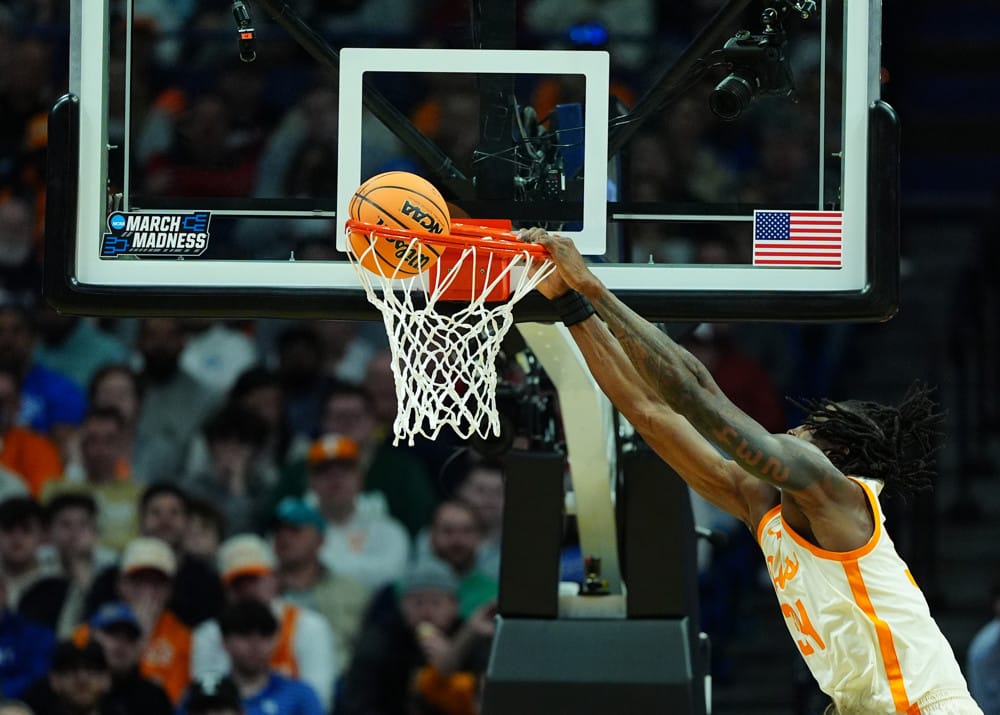
Every March, something predictable happens. Office whiteboards fill up with brackets, group chats explode with trash talk over a 12-seed nobody had ever heard of, and otherwise sensible adults start swearing they “had a feeling” about that mid-major Cinderella. The NCAA tournament has a way of pulling everybody in, and the habit it triggers runs deeper than just filling out a bracket on a napkin.
For sports fans, March Madness is the great equalizer. You don’t need to follow college hoops all season to get swept up in a buzzer-beater. And once those games start tipping off in waves across the afternoon, the urge to have a little something riding on each one becomes almost irresistible. That’s where the modern tournament habit really takes shape.
The Tournament That Turns Casual Fans Into Daily Players
What makes the Madness so madly addictive is the volume. The NFL gives you a handful of games on Sunday. The tournament’s opening rounds throw dozens of matchups at you in a single afternoon, often four at once, with games overlapping so you’re flipping between screens like an air traffic controller.
That kind of nonstop action rewires how people watch. A casual fan who’d normally tune out a 14-seed versus a 3-seed suddenly cares deeply because they took the underdog to cover. The Propcast crowd knows this feeling well — it’s the same itch that makes player props so fun during the NBA season, except now it’s compressed into three frantic weeks of college ball.
By the time the Sweet 16 rolls around, plenty of fans have built a daily rhythm around it. Wake up, check the bracket, scan the matchups, and look for a place to put a little action down before tip-off. The tournament doesn’t just entertain — it builds a routine. This appetite isn’t unique to college hoops, either. The 2026 World Cup is set to break records, a reminder that whenever a tournament captures the whole planet’s attention, online play follows close behind. The Madness is America’s springtime version of that same phenomenon.
Why Online Play Surges During the Madness
The data backs up what every sports fan already senses. Online play spikes hard during marquee events, and the appetite for it keeps climbing. One survey found that 22% of all Americans now hold an active online sports betting account, with the number jumping to roughly half of men between 18 and 49. The tournament is exactly the kind of event that pulls those accounts off the bench and into the starting lineup.
Part of it is timing. The games run during work hours, so people lean on their phones rather than parking themselves in front of a TV all day. Part of it is the sheer number of bets available — moneylines, spreads, totals, and props on everything from total made threes to which team scores first. And part of it is simply that March Madness is a shared cultural moment, the kind that makes even folks who never gamble curious about getting in on the fun.
That convenience is exactly why payment choice matters so much. When the action is moving fast and accounts are firing up on demand, the smoothness of getting money in and out becomes part of the experience. In the Netherlands, for instance, anyone weighing their options can browse a detailed paypal casino comparison that breaks down which Dutch-facing sites accept the method, how deposits and withdrawals actually work, what the verification steps look like, and how the bonuses stack up. Those guides also cover sites operating outside the standard Dutch system and lay out alternative payment routes when PayPal isn’t available — exactly the kind of homework that pays off before a big tournament window opens.
Smooth Payments Keep the Action Flowing
Here’s the thing that separates a fun tournament run from a frustrating one: how quickly money moves. When games are tipping off every twenty minutes, nobody wants to be stuck waiting on a deposit to clear or fumbling through a clunky checkout while the clock ticks toward tip-off. The smoother the payment, the better the experience, and that’s why so many players gravitate toward familiar, trusted methods they already use every day.
PayPal sits near the top of that list for a reason. It’s quick, it’s recognizable, and it adds a layer of separation between a player’s bank details and the site they’re using. Internationally, the same logic applies across different markets, with players everywhere leaning on methods they already trust to keep the action flowing without friction.
The broader point is that payment choice shapes behavior. Researchers studying digital payment solutions in gambling have explored how the convenience of modern methods influences how people play, which is worth keeping in mind whenever a frictionless deposit makes that next bet feel a little too easy.
Keeping the Fun in the Madness
The beauty of the tournament is that it’s a sprint, not a marathon. Three weeks of chaos, a champion crowned, and then the brackets go in the recycling bin. That makes it the perfect window to set limits and treat the whole thing as entertainment rather than an investment strategy.
Smart fans go in with a plan. They decide ahead of time what they’re comfortable putting toward the weekend’s games, they spread their interest across matchups instead of dumping everything on one outcome, and they remember that the joy comes from the sweat, not just the payout. A 15-seed knocking off a blue blood feels amazing whether there’s a buck on it or not.
When April arrives and the nets get cut down, the daily habit fades just as fast as it formed. Until next March, when the brackets come out, the chats light up again, and the whole beautiful cycle starts over.