


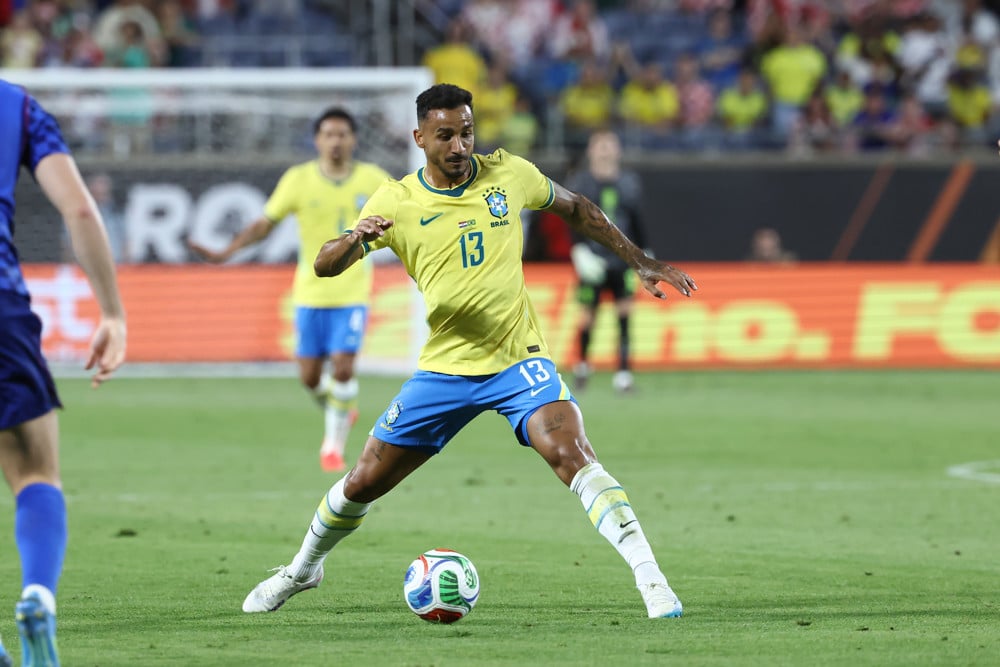
Soccer built the in-play betting market. Every other sport is still catching up, including the ones Americans care about most.
Before in-play betting existed, sports wagering had a natural stopping point. The lines closed at kickoff. Whatever position you’d taken, you were in it. What happened on the pitch was just something to watch and hope about.
Soccer changed that. The sport’s structure (two continuous 45-minute halves, constant fluidity, no timeouts, no stoppages for commercial breaks) turned out to be almost perfectly suited to live wagering. A goal in the tenth minute reshapes the entire match dynamic instantly. A red card transforms the probability landscape in seconds. For a bettor watching live, there’s a constant stream of new information that either validates or undermines a pre-game position and the natural next step is being able to act on it.
European sportsbooks figured this out first. In-play betting on soccer was available in UK and Irish markets well before most American bettors had heard the term, and the product matured quickly because the demand was there and the sport fed it continuously.
Why Soccer’s Structure Is So Well-Suited to In-Play Markets
American sports are built around interruption. NFL drives end in punts, incomplete passes, penalties. MLB has pitching changes and long stretches where nothing changes the game state. NBA has foul stoppages, timeouts and a shot clock that routinely produces predictable late-game sequences. Every one of those interruptions is an opportunity for a sportsbook to suspend a market, recalibrate and reopen which slows down the in-play experience considerably.
Soccer doesn’t have that problem. The game flows. Markets can stay live through most of a half without a natural break demanding a pause. The odds movement is continuous rather than step-by-step, which makes in-play wagering feel more like a genuine real-time market than a series of discrete pre-game bets stitched together.
That continuity is why in-play betting accounted for over 60% of all online soccer bets placed in Europe in 2024. In mature markets where soccer and in-play betting grew up together, live wagering isn’t a feature. No, it’s the primary mode. The pre-game bet is almost the afterthought.
The Irish Market as a Case Study
Ireland is worth looking at specifically because it illustrates how deep the in-play culture goes when a market has had time to develop properly. Irish sports fans have been betting in-play on soccer for a while now, and the product has evolved significantly in that time. Micro-markets on individual corners, yellow cards and throw-ins sit alongside the traditional match result and next goalscorer options.
Irish-licensed operators have been at the front of that product development, partly because the regulatory environment allowed it and partly because the demand from a football-obsessed market pushed operators to build better live products to stay competitive. For anyone wanting to see what a mature in-play soccer betting product looks like in practice, Irish-licensed platforms where you can place a bet in play give you a sense of how far the format has developed from its early iterations. The market depth on a live Champions League or Premier League match on a .ie platform reflects years of refinement that US sportsbooks are still working toward.
Where American Sports Fit Into This Picture
US sportsbooks have been building their in-play products aggressively since legalization spread post-2018, and the results are genuinely impressive in some areas. NBA live betting has developed well. The pace of the game, the frequency of scoring and the volume of player prop options make it a natural fit. NFL in-play is improving, though the stop-start structure means markets get suspended more often than soccer bettors are used to.
Baseball is the tougher case. The game’s pace and the nature of its decision points (pitching changes, at-bats, inning breaks) mean the live betting experience is fundamentally different from soccer. It’s not worse, exactly, but it requires a different kind of attention and a different relationship with the markets.
What European soccer betting built was a culture of watching sport and betting simultaneously, where the live wager is part of the experience of following the match rather than a separate activity. That integration hasn’t fully arrived in American sports betting yet, but it’s clearly where the market is heading. The growth of second-screen viewing, in-stadium betting kiosks and live odds integrated into broadcast graphics all point the same direction.
What It Means for the Serious Bettor
The practical takeaway from soccer’s influence on in-play markets is that the format rewards a specific kind of attention. Pre-game bettors research, form views and place their positions before action starts. In-play bettors have to process new information as it arrives and make decisions under time pressure, sometimes with markets moving against them before they’ve finished thinking.
The edge in in-play betting, when it exists, tends to come from reading game state better than the market does. Not just the score, but the momentum, the tactical adjustments, the physical condition of players in the second half of a demanding match. That’s a different skill set from pre-game handicapping, and it’s one that the soccer betting world has spent decades developing.
The US market will get there. It just had a head start from a sport that was born to be bet live.