

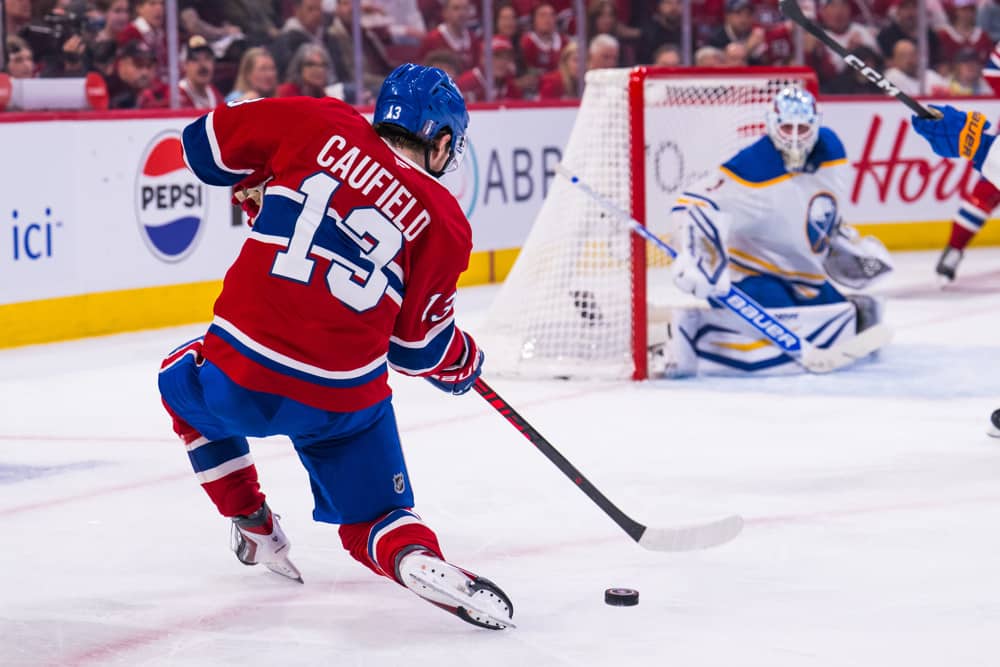
Hockey’s old guard will tell you the playoffs are a different sport. Tighter checking, more violence, less room to skate. The theory holds that teams who intimidate win in May. That theory was supposed to keep showing up in the data. This year it isn’t.
Carolina and Colorado sit at the top of the Eastern and Western Conference standings. Both are deep into the second round, and both rank dead last in the NHL for fighting majors. The Hurricanes finished the regular season with 8 fights across 82 games. The Avalanche had 10. No team threw fewer hands. No team built a better record. Carolina closed at 54-16. Colorado at 53-22. They sit as co-favorites in head-to-head Cup futures at +340.
That is a strange picture for anyone betting on playoff hockey on the old assumption that grit wins.
The bottom of the fight chart is the top of the standings
The first round didn’t move the needle on the theory. Both Carolina and Colorado handled their opening series without much trouble. Discipline mattered more than intimidation. Power play efficiency mattered more than fourth-line agitators. Goaltending mattered more than almost anything else.
Look at the wider list and the pattern holds. Tampa Bay led the league with 44 fights and still made the playoffs, but at 50-26 they were nobody’s idea of a top seed. Calgary fought 23 times and finished 33-39. Nashville’s fight count dropped from 37 the previous season to 15 this year, and they missed the postseason for a second straight spring. Throwing more punches didn’t correlate with winning hockey games. In some cases it correlated with losing them.
Carolina and Colorado sit at the bottom of the league in fights while sitting at the top of the Cup odds board, as TheSportsGeek noted in their analysis of this season’s fight data, the two quietest teams in the league are also the two most likely to lift the trophy. That isn’t a coincidence. It is a reflection of how the modern NHL values roster construction over intimidation.
A quick read of the fight standings
Sort the league by fighting majors and cross-reference where each team finished:
- Bottom 5 in fights: Carolina (1st overall), Colorado (2nd overall), New Jersey, Vegas, and Toronto all made the playoffs.
- Middle of the pack: a mix of bubble teams and lower seeds, no clear pattern either way.
- Top 5 in fights: Tampa Bay was the only one to make it. The other four either missed entirely or got bounced in round one.
That isn’t a small-sample-size argument. It is the full league across 82 games. The teams built to bully are not the teams winning. The teams skating around the bullying are.
Why the league moved on from fighting
The structural reason is straightforward. The modern NHL is faster, the rules around obstruction are tighter, and the analytics inside front offices have been pushing against fighting for years. A player who drops the gloves loses minutes in the box. A team that takes retaliatory penalties leaks goals. Carolina under Rod Brind’Amour has been the textbook on this for half a decade. Colorado built around skill from the moment Joe Sakic took over.
The product on the ice tells the same story. Cup-favored rosters now carry maybe one designated tough guy, sometimes zero. The fourth-line role has shifted toward forecheckers and penalty killers. The economics of a 23-man playoff roster don’t accommodate a fighter who can’t keep up at 5-on-5.
What this means for the rest of the bracket
If you are still pricing playoff series by who looks meaner on paper, the futures market has already moved past you. Sportsbooks have Carolina and Colorado at +340 for the projected Cup matchup, which would be the lowest-fighting Final in the modern era. That price isn’t an accident. It reflects how these two front offices have built rosters, how both head coaches manage minutes, and how the league actually plays now.
For series prices going forward, the variables worth weighting are goaltending matchups, special teams, and depth scoring. Fighting majors don’t belong in the model. They might tell you something about a team’s identity in October. By May they tell you almost nothing.
There is one caveat worth holding. A single nasty hit or a goaltender confrontation can shift the emotional register of a series for a game or two, and there are still rosters with the kind of agitators who can engineer that. But that is variance, not a pattern. The pattern is that Carolina and Colorado, the two quietest teams in the league all year, are the two most likely to lift the trophy.
The old hockey clichés will keep getting recycled on broadcasts. The numbers are pointing somewhere else.