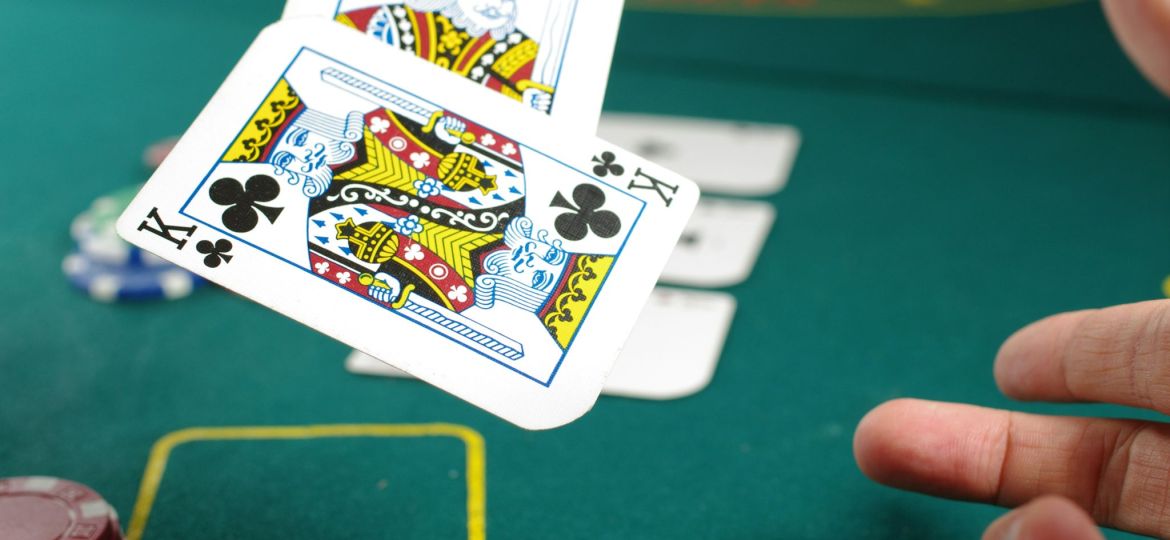



Sports betting analysis and casino game mathematics examine different activities through shared principles, including probability, expected value, statistical variation and risk. When you study a football match or consider a casino game, you need to distinguish a possible outcome from a likely one, since a single win reveals little about long-term performance. Sports analysts assess team statistics, player availability and historical results, whereas casino mathematics draws on established rules, probabilities and payouts.
The American Gaming Association reported that US commercial sports betting generated $16.96 billion in revenue from $166.94 billion in wagers during 2025, illustrating the scale of a market in which odds and probabilities have substantial financial consequences. Both approaches help you evaluate uncertainty more systematically, yet neither guarantees a favorable result. Understanding these connections gives you a clearer way to interpret odds, assess potential returns and recognize the limits of numerical predictions when real money is at stake.
Odds, payouts and the price of uncertainty
Odds express the relationship between an uncertain outcome and its potential financial return, so understanding them helps you compare different wagers. Suppose a sportsbook offers American odds of -110 on a football point spread, meaning you risk $110 to earn $100 in profit. At an online casino such as https://www.711casino.com, the same broad principle applies when you compare potential payouts with the probability of winning.
Consider European roulette, which has 37 pockets and pays 35 to 1 for a successful single-number bet. A fair payout would be 36 to 1, so the difference gives the casino a 2.70% house edge on that wager. When you examine either activity, the advertised return becomes more meaningful once you understand the probability behind it.
Expected value and the mathematics of decisions
Expected value estimates the average financial outcome of a decision across repeated trials, weighting each possible result by its probability. Imagine you wager $100 at -110 on a sporting event that you estimate has a 55% chance of winning. Your potential profit is $90.91 if successful, whereas a loss costs your full $100 stake.
Combining these outcomes produces an estimated expected profit of $5.91 per wager, provided your probability estimate is accurate. Casino mathematics uses the same calculation to assess theoretical returns. A slot game with a 96% return to player (RTP) theoretically returns $96 for every $100 wagered over an enormous number of plays. You should interpret this figure as a long-run average, since an individual session can produce substantially different results.
Variance and the problem of short-term results
Variance explains why your actual results can differ considerably from mathematical expectations, even when your calculations are sound. A football prediction can appear well supported by statistics before a late injury or an unexpected goal changes the outcome. Casino players experience comparable fluctuations when a run of spins or card hands produces results far above or below the expected average.
The underlying models differ, however, since sports outcomes depend on changing real-world conditions whereas games such as roulette follow defined probabilities when the wheel operates fairly. A winning streak does not prove that your next wager has better prospects, just as several losses do not automatically indicate poor analysis. Larger samples help you evaluate performance more reliably, but random variation can still affect your results.
The house edge and sportsbook margin
The house edge and sportsbook margin describe how gambling operators establish a mathematical advantage through their rules or offered odds. In roulette, the house edge follows from the relationship between the wheel’s pockets and the payout structure, whereas sportsbook margins are reflected in the prices offered across possible outcomes. The American Gaming Association reported that US commercial sports betting generated $16.96 billion in revenue from $166.94 billion in wagers during 2025.
These figures illustrate why total wagering and operator revenue represent different measures of activity. They also provide useful context when you assess the economics of the industry. Your own results depend on the probabilities and prices attached to individual wagers, so industry-wide revenue figures cannot predict whether a particular bet will win or establish your personal chances of success.
Data quality and the limits of analysis
Reliable analysis depends on the quality of your information as much as the calculations themselves. Sports bettors can examine several seasons of results, but their estimates become less useful if they overlook coaching changes, player absences, opposition strength or recent tactical developments. Casino games offer more stable mathematical foundations, yet their probabilities still depend on specific rules and assumptions.
Blackjack outcomes, for instance, vary with the dealer’s rules, the number of decks and your playing strategy. Slot RTP describes theoretical long-run performance, so it cannot promise a particular return during your next session. When you assess any set of numbers, consider where the data came from, which assumptions underpin the calculation and what evidence could challenge your conclusion.
Conclusion: Numbers inform decisions, not certainty
Sports betting analysis and casino game mathematics share a practical lesson: probability helps you understand uncertainty without removing it. Expected value allows you to compare potential financial outcomes, variance explains deviations from averages and operator margins reveal the cost built into wagering terms.
The distinction lies in how probabilities are established, since sports forecasting requires estimates about changing events, whereas casino mathematics often starts with fixed rules. You can use these principles to interpret odds more critically and recognize why an apparently attractive payout does not automatically represent good value. Ultimately, mathematical understanding gives you a stronger basis for evaluating gambling decisions, but it cannot eliminate financial risk or guarantee a winning result.