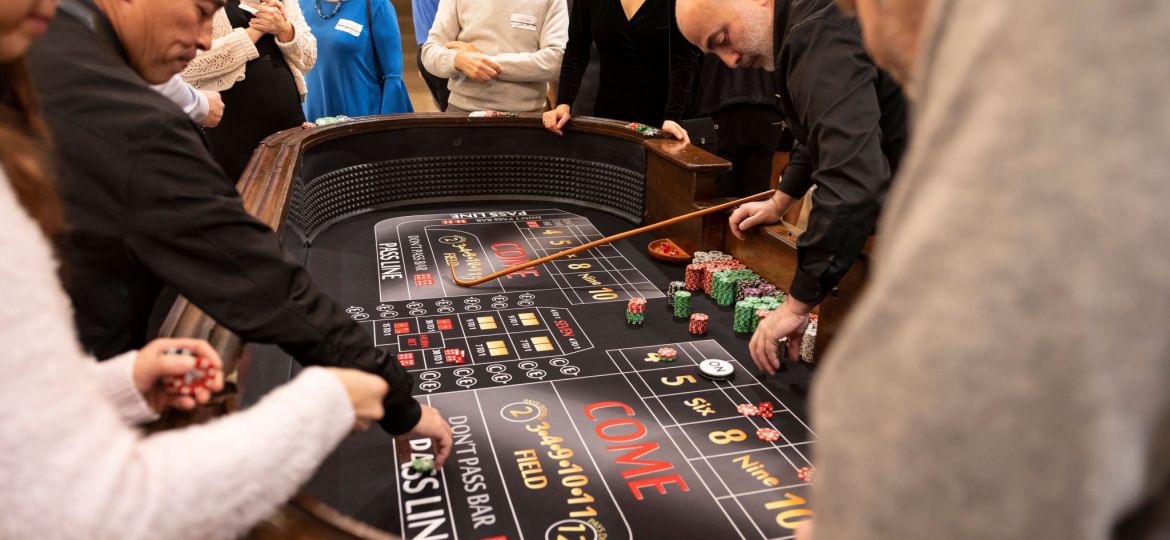



Around 6.6 million Australians play poker machines, according to The Australia Institute’s July 2025 analysis. That’s about 33.4% of adults, and the figure doesn’t count Western Australia. That’s a lot of people tapping a button and trusting whatever comes up next. The same trust applies online, whether you’re spinning pokies or joining a live dealer table at VoltRush casino, where every result depends on numbers you never see.
So who checks the maths behind every spin?
The answer goes through a physics lab in Canberra, a set of statistical tests you could explain over a sausage sizzle, accredited testing labs in our major cities and a quantum computing breakthrough published in one of the world’s most respected science journals. We’ll look at each one, keep the jargon to a minimum and finish with a clear picture of what sits behind the screen.
Seeds, Shuffles and Silicon
A random number generator, or RNG, does one job. It produces numbers that nobody can predict, whether that’s a player, a programmer or the machine’s own maker.
Most gaming RNGs are software. They start from a value called a seed and run it through a mathematical formula that produces new numbers far faster than you could blink. Done well, the output has no pattern anyone can spot or use.
Some of the most interesting work in this area happens right here in Australia. Physicists at the Australian National University produce true random numbers from a physical quantum source. They split a beam of light into two and measure the power in each beam. Because light behaves unpredictably at the quantum level, nobody can predict the tiny fluctuations they measure.
People use it a lot. By 2022, ANU Quantum Numbers had handled more than two billion requests from 70 countries, as Startup Daily reported. Its numbers have been used in clinical trials, weather prediction and password creation.
Professor Ping Koy Lam, AQN Team Leader at ANU, explains why the approach works:
“Quantum physics practically provides an infinite source of truly random numbers. These quantum random numbers are guaranteed by the laws of physics to be unpredictable and unbiased.”
It helps to think of randomness the way you’d think of tap water. You rarely think about it, yet a lot of engineering goes into making sure it arrives clean every time.
Unpredictable numbers still need to be checked, though, and that’s where testing comes in.
The Backyard Barbie Shuffle Test
Imagine a deck of cards being shuffled at a backyard barbie on a Saturday arvo. After a few hours of games, you’d expect a fair deck to behave in certain ways. Every card would turn up roughly as often as the others. No suit would keep coming up in a row, and the same hand wouldn’t land at a regular rhythm.
RNG testers follow that same logic, just with millions of results instead of a few dozen hands. Each test has a name, and each one looks for a different kind of hidden pattern.
| Test | What it checks | The barbie version |
| Chi-square | Results are spread evenly across every possible value | Each card turns up about as often as the rest over a long night |
| Runs | Streaks are neither too neat nor too clumped | The colours don’t simply alternate red, black, red, black all evening |
| Gap | Spacing between repeated values looks natural | Aces don’t arrive on a timetable like the 7:15 bus |
| Poker | Patterns inside groups of results appear at natural rates | Full houses show up about as often as maths says they should |
| Serial correlation | One result has no effect on the next | The last card dealt says nothing about the one coming |
Surprisingly, a generator can also fail by being too perfect. If results matched expectations exactly every time, testers would get suspicious, because real randomness is a little messy. Statisticians point out that a sound generator will still ‘fail’ a test about 5% of the time at the common 0.05 threshold, purely by chance. That’s why testers run checks many times rather than trusting one result. It’s oddly reassuring; a little unevenness is exactly what an honest generator looks like.
These checks also protect the long-run maths you see as a player. VoltRush shows RTP (return to player) information on its pokies. That figure only means something if the numbers behind it are fair, and fair numbers are what this testing is meant to confirm.
So who runs these checks? Some of them are closer to home than you’d expect.
Lab Coats Down Under
Australia has its own independent testing labs, run by specialists whose job is to examine gaming technology before it reaches you.
Gaming Laboratories International (GLI) has had a lab in Melbourne since 2007, and in October 2025 it moved to a new, larger Melbourne location. The company also has offices in Sydney and Adelaide. GLI reports that it has certified nearly 2 million items and tested for more than 710 jurisdictions worldwide. That’s the company’s own figure, so treat it as self-reported.
Independent checks on the labs themselves help build trust. BMM Testlabs’ Melbourne office holds national accreditation for gaming machine and system testing, and GLI says it holds international ISO/IEC accreditations. Together, these accreditations cover:
- RNG and maths verification, where testers confirm the numbers behave as they should
- Source code review, which looks inside the software itself
- Technical competence under the international standards for testing, inspection and certification bodies
This testing counts for more as play moves to screens. Research from the ANU Centre for Social Research and Methods found that 56.1% of Australians who gambled in 2025 did so mostly online. More screens mean more software, and more software means more for the labs to check.
Choice helps here too. VoltRush lets you filter games by provider, category, volatility and theme, so you can see which studio built each title before you open it. If a game had to pass a long list of statistical checks before you ever saw it, would a lucky streak still feel like a pattern?
Labs have spent decades refining classical testing. Physicists are now taking things a step further.
Proof Beats Promises
The newest research aims to prove randomness outright.
In March 2025, a team including JPMorganChase, Quantinuum, Argonne National Laboratory, Oak Ridge National Laboratory and the University of Texas at Austin published a peer-reviewed paper in Nature. They used the 56-qubit Quantinuum H2-1 quantum computer, accessed over the internet, to produce 71,313 bits of certified randomness. Supercomputers with a combined capacity of 1.1 × 10^18 operations per second then confirmed the result. Bloomberg called it a world first.
The work has continued since. In April 2025, Quantinuum announced that its ‘Quantum Origin’ software had become the first software quantum random number generator to achieve NIST validation. That’s a company announcement. Still, it points to true randomness becoming available without specialist hardware.
You can see both kinds of randomness side by side at VoltRush’s live casino, which offers live dealer tables and game shows. Shuffled cards and spinning wheels sit just a tap away from software-driven pokies, and both are built to give results nobody can predict.
The tests are being tested too. A March 2026 study in Computational and Applied Mathematics looked at how much ground a widely used set of randomness tests really covers. Each new layer of checking makes the one below it stronger.
Random by Design, Checked by Experts
Quantum light in Canberra shows what true unpredictability looks like. Statistical tests you could explain at a barbie look for hidden patterns. Accredited Australian labs examine the software, and peer-reviewed physics is learning to prove randomness outright.
Randomness is one of the few things we value because it has no pattern at all, and there’s a lot of hard work behind that lack of pattern. If you’d like to ask questions as you go, VoltRush offers 24/7 live chat and runs on web, iOS and Android.
As quantum methods become cheaper and more common, we’ll likely see more of this science make its way into everyday technology.
Please gamble responsibly. Set a budget before you play and never chase losses. If gambling stops being fun for you or someone close to you, confidential support is available 24 hours a day.