

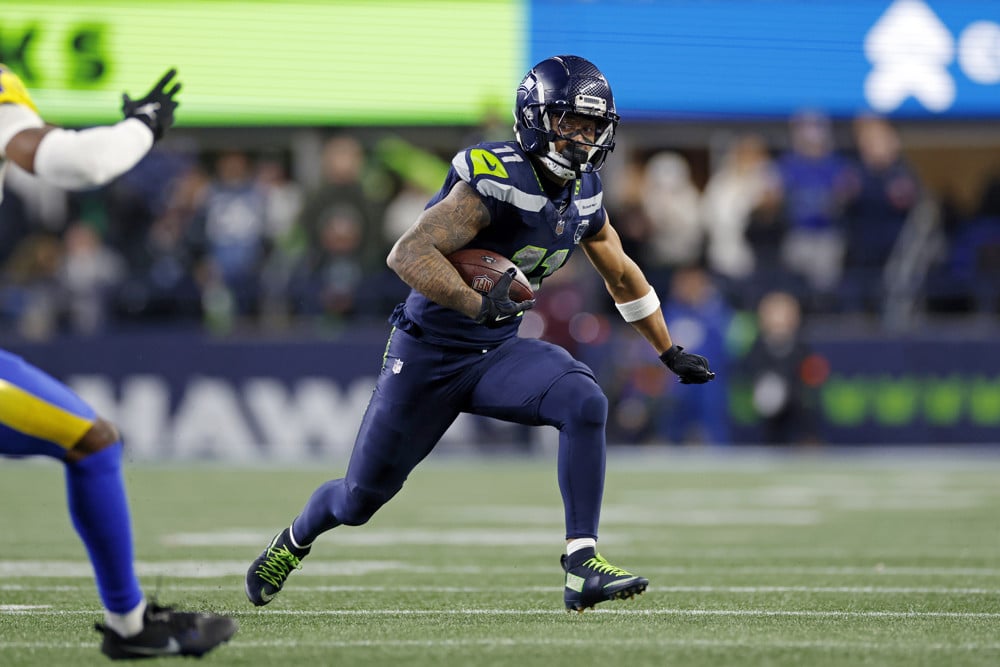
George Kittle was Pro Football Focus’s highest-graded tight end of the 2025 season. Trey McBride, who finished sixth in those grades, caught more than twice as many passes.
The gap makes sense once you look at their jobs. Kittle can take over a game without being the focal point of the passing attack. McBride was the focal point of Arizona’s passing attack. In a PPR league, that second job description is awfully hard to beat.
Fantasy football rewards a narrow selection of what happens on a football field. The interesting cases arise when a player’s value to his NFL team and his value to a fantasy lineup start moving in different directions.
George Kittle’s Value Extended Far Beyond His Targets
Kittle finished the 2025 regular season with 57 catches, 628 yards and seven touchdowns in 11 games. McBride had 126 catches, 1,239 yards and 11 scores in 17.
McBride was a fantasy monster, and deservedly so. But Kittle’s 90.7 overall grade in PFF’s end-of-season tight end evaluation reflects a broader workload.
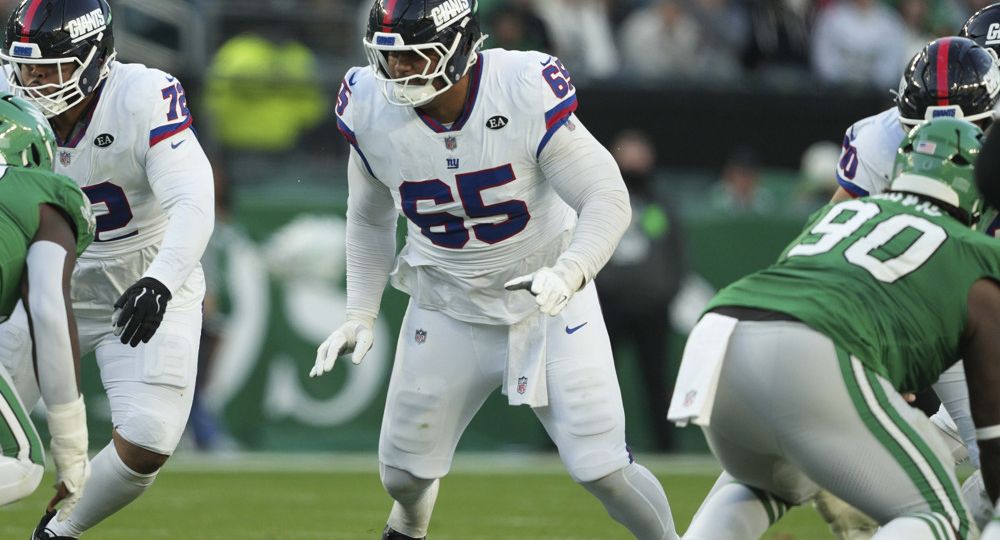
Kittle can line up next to the tackle, move a defensive end in the run game, then split out and beat a linebacker on the next play. That flexibility changes what San Francisco can call without changing personnel. A fantasy app rewards only the second play, assuming he catches the ball.
Here’s an interesting wrinkle: Kittle was actually more productive per route than McBride in 2025, according to PFF, averaging 2.11 receiving yards per route against McBride’s 1.78.
Kittle’s receiving efficiency wasn’t the problem. McBride’s enormous target volume made him the clear fantasy choice over the full season, while Kittle’s broader responsibilities and six missed games limited his totals.
PPR Scoring Can Even Reverse the Receiving-Yard Leaderboard
Consider another real example from 2025.
Jaxon Smith-Njigba led the NFL with 1,793 receiving yards. Puka Nacua finished with 1,715. Both caught 10 touchdowns, but Nacua had 129 receptions to Smith-Njigba’s 119.
Count only their receiving production under conventional full-PPR scoring, and Nacua comes out ahead, 360.5 points to 358.3.
Ten extra catches were worth more than Smith-Njigba’s additional 78 yards.
That narrow advantage doesn’t tell us which player was the better receiver. It tells us how much the scoring rules influence fantasy rankings.
A five-yard catch on third-and-12 earns 1.5 PPR points even if the offense punts on the next play. A receiver who draws the safety away and leaves a teammate wide open for a 40-yard touchdown gets nothing.
The same issue affects running backs. A player catching short checkdowns can be extremely valuable in PPR formats, even when another back is doing considerably more damage on the ground.
Why Opportunity Beats Reputation on Sundays
For fantasy purposes, the most useful information is often buried a layer below the box score.
Start with routes, rather than simply looking at snaps.
A tight end can play 80% of his team’s offensive snaps and still spend a significant share of passing plays blocking. Another might play fewer snaps but run a route almost every time the quarterback drops back. The second player can have a much clearer path to targets.
Then consider targets per route run. A receiver who consistently earns targets when he’s on the field is demonstrating something more repeatable than one spectacular catch. Combine that with route participation, and you get a better picture of both his ability to attract the ball and his opportunities to do so.
Running backs require another approach. Twenty carries between the 20-yard lines might produce a quiet fantasy day, while a teammate getting six touches, including two carries inside the five, has a considerably better chance of scoring a touchdown.
Goal-line work and passing-down usage can tell us more about fantasy upside than raw snap counts.
Game script complicates things further.
A running back can lose carries simply because his team falls behind early, regardless of how well he’s playing. Meanwhile, a receiver can pile up late receptions against soft coverage without having earned a bigger role in the offense.
Coaches are trying to win the game in front of them. Keeping your fantasy projections intact isn’t part of the assignment.
The Stat You’re Measuring Changes the Answer
A player can look valuable in one fantasy format and ordinary in another. That becomes particularly obvious when comparing season-long PPR scoring with other DFS formats centered on individual player statistics.
Suppose a receiver catches eight passes for 45 yards. That’s 12.5 points in full PPR before any bonuses.
For a pick’em entry based on a 60.5-yard receiving line, however, those eight catches won’t help. The relevant question is whether the player reaches 61 yards, regardless of how many receptions it takes.
That changes the research.
For reception-based scoring, short-area targets and consistent passing-game involvement carry considerable weight. When evaluating receiving yards, average depth of target, yards after the catch and defensive matchups become important considerations.
The player’s talent hasn’t changed. You’re measuring something different.
Read the Role Before the Ranking
The best fantasy decisions usually begin with understanding what a player will actually be asked to do.
How often is he running routes? Who gets the goal-line carries? What happens to his workload when his team trails? Has a recent injury created more opportunities, or has a teammate quietly taken over part of his role?
Those questions won’t make projections foolproof. They will, however, help distinguish a player who enjoyed a big Sunday from one who’s positioned to keep producing.
An NFL coach can watch the film and love a player who barely touched the ball. A fantasy manager can watch the same game and wonder why he started him.
Both can be right.