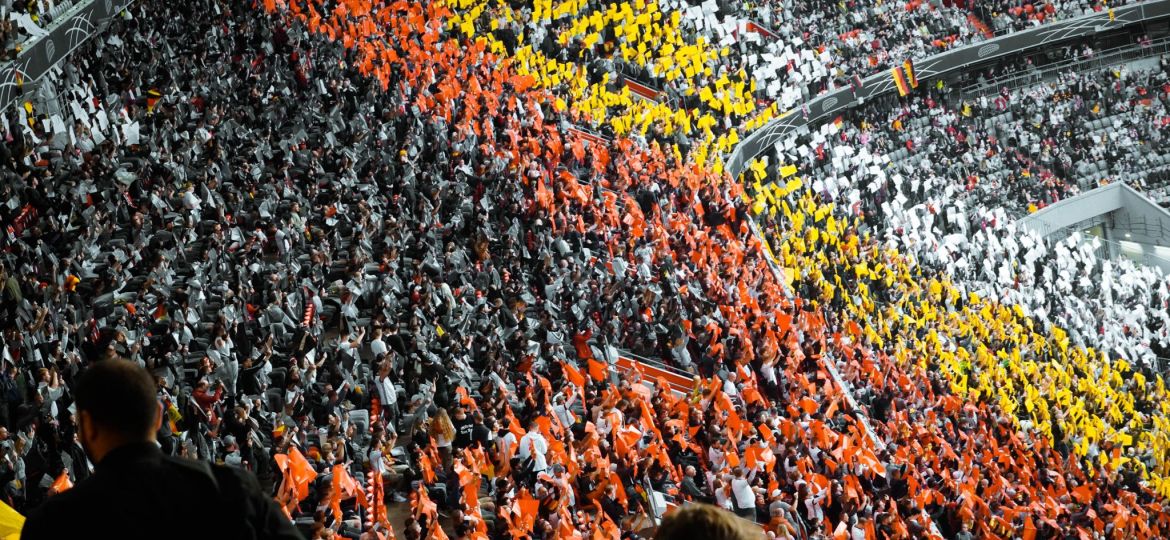



Sixty seconds into extra time, a final that had been strangling itself for an hour and a half finally cracked open at the 2026 World Cup. Ferran Torres, a substitute who had gone the entire tournament without a single goal, met the ball in the 106th minute and slid it past Emiliano Martínez, and with that Spain owned its second world title. Argentina, already reduced to ten men after Enzo Fernández was shown red, never pieced together a response. A month of collective noise came down, in the end, to one strike.
To the people who had argued about it for weeks, the fact that it was decided in extra time felt almost scripted. Across the United States the final unfolded less like a broadcast and more like a verdict on forecasts that had been locked in long before anyone kicked off. Brackets, office pools, living-room wagers, friends who had traded hunches since June. The whistle just confirmed who had read the thing correctly.
Prediction rarely travels alone, as this tournament proved on a scale few expected. Well before the final weekend, small circles had hardened forecasting into a standing weekly habit, a shared spreadsheet in one group and a messaging-app league in another, each governed by the same unbending rule: scores go in before the whistle, and no edits afterward. What played out on screen was only half the evening. The private contest humming beside it was the rest.
None of this stays informal for long. The steady drift toward social sports betting describes exactly how prediction swelled into a group pursuit measured in private leaderboards and head-to-head records among friends instead of money changing hands. Before it is anything else, the competition is social. The scoreboard belongs to the circle that built it, and it carries over season after season, which is part of why the habit sticks.
A tournament that punished the sure thing
Upsets rewrote the brackets almost daily, and anyone tracking them learned fast to hold a conviction loosely. France announced itself when Ousmane Dembélé scored the second-fastest hat trick in World Cup history, three goals inside roughly half an hour, in a 4-1 rout of a heavily rotated Norway that had rested Erling Haaland. The group stage rewarded the bold and humiliated the cautious in equal measure, which is not usually how these things go.
Keeping pace with the knockout rounds proved too much even for the sharpest data-driven forecasts. The models had parked Spain, France and Argentina near the summit, and all three did advance deep, yet the margins kept shrinking to single goals and late substitutions until the numbers stopped meaning much. Treat them as destiny and the quarterfinals corrected you, where favorites scraped through on penalties and fine margins rather than anything resembling control.
Proximity has a gravity of its own, and the host nations bent the pools toward them. When Canada edged South Africa 1-0 to open the knockout stage, the result shredded dozens of friendly brackets that had written the co-hosts off early, proof that living nearby breeds loyalty and lousy calls in roughly equal doses. Home soil turned idle viewers into committed forecasters overnight, and the leagues filled up with people who had never once tracked a group stage.
Behind Argentina‘s run stood Lionel Messi, who closed what he had called his final World Cup with eight goals and four assists, the sentimental pick inside countless pools, the one people wanted so badly to be right about. Spain arrived by the opposite road. It built everything on defense, conceding rarely and grinding out the sort of tight, airless results that quietly break anyone who had bet on goals.
The second tournament nobody televised
By the semifinals the predicting had become a parallel competition with standings of its own. The same fixtures that anchor ongoing soccer coverage also fed the private leagues, where a friend’s nervy call of Spain over a glamour pick suddenly carried real weight inside the group. Each round thinned the field of human forecasters as ruthlessly as it thinned the field of teams.
The stake was never the point; the company around it was. What kept people coming back was the standing inside a group that gathered every week to defend a prediction, eat a bad one, and set the next slate. Friends who agreed on almost nothing else discovered a shared language in probabilities, projected lineups, and the stubborn conviction that this time, finally, they had spotted something everyone else had missed.
The difference this time had less to do with the quality of the guessing than with its shape. Prediction stopped being a solitary act and turned into a shared ledger of judgment, kept honest by friends who remembered every blown call. These rituals borrowed the rhythm of the tournament itself, a weekly reset, a running tally, a reckoning at the close. The format handed casual fans a reason to study a match they would otherwise have scrolled right past.
What held the whole thing together was how little room it left to cheat. Scores logged in advance, visible to everyone, settled by the actual result, with none of the revisionism that fuels every barroom argument. A pick was right or it wasn’t, and the record stayed there for the group to see. That plainness explains why the habit outlived the final whistle and rolled straight into the new club season.
Spain lifted the trophy on July 19, yet millions were keeping a second, smaller tally the same night. Inside a friend’s spreadsheet the final score mattered less than who had called it first and who had quietly folded weeks earlier. That is the quiet inheritance of this tournament, a month in which predicting the game together became as fixed a part of the ritual as watching it, and the circle that guessed best walked off with something no scoreboard was ever going to hand them.