


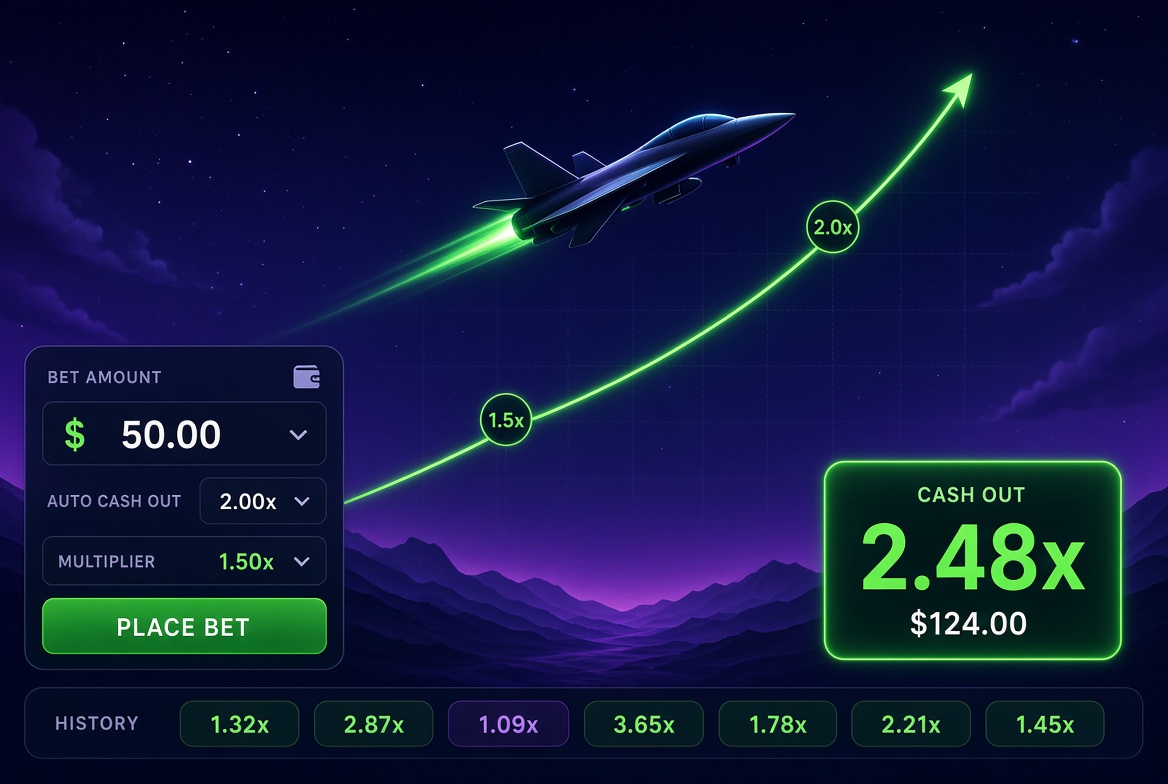
Crash games deliver fast rounds and clear decisions. You place a bet, a multiplier rises, and you cash out before the round ends. A solid crash games strategy helps you manage the action without chasing unrealistic wins. These games include Aviator from Spribe, Spaceman from Pragmatic Play, and other similar titles. No approach removes the house edge, but smart choices improve your control and extend your sessions.

Crash Games: Strategy And Bankroll Tips For Aviator, Spaceman, and Similar Titles
How Crash Games Work
A round begins with a short betting window. You set your stake, then the multiplier starts at 1.00X and climbs. You cash out at any moment to lock in the current multiplier. If the round crashes first, you lose the bet. The crash point is determined by a certified random number generator before the animation starts. You cannot influence the outcome. You only decide when to exit.
Aviator typically has a 3% house edge. Spaceman usually sits at a 3.5% house edge. Most rounds end at low multipliers, as the higher ones appear less often. Auto cash-out tools remove the need for split-second timing. You set a target in advance and the game handles the rest of it. This setup keeps decisions consistent across many rounds.
Setting Effective Cash-Out Targets
Your cash-out target shapes both the hit rate and the variance. Lower targets produce more frequent small wins. Higher targets create larger payouts but more losing streaks. A common starting point sits at 1.5X and 2X. At roughly 1.5X on a 3% house edge game, you win the majority of rounds. This approach reduces big swings and supports longer play.
You can also aim for 2X as a balanced middle ground. It feels achievable yet still carries real risk of early crashes. Targets of 5X or higher suit players who accept longer dry spells for occasional bigger returns. The expected value stays the same across fixed targets because the house edge is built into the multiplier distribution. Choose the target that matches your tolerance for variance, then stick with it for the session. Switching mid-stream often leads to chasing losses.
Using Dual Bets And Partial Cash-Outs
A game like Aviator lets you place two independent bets in the same round. Many players split the stake. They put the larger portion on a low auto cash-out such as 1.5X. They put the smaller portion on a higher target like 5X. The safer bet recovers most of the round’s cost when it hits. The riskier bet then rides for potential upside. Both bets face the same crash point, so an early crash still costs both stakes.
Spaceman offers a 50% cash-out option. You can bank half your stake at a set multiplier while the remaining half continues. This locks in some return early and leaves the rest exposed. It does not change the long-term math, but it gives you more control during a single round. Use these features to match your risk preference. Keep the split consistent rather than adjusting after every result.
Bankroll Management Rules
Bankroll rules matter more than any cash-out plan. Decide your session budget before you start. This is money you can afford to lose. Size each bet at 1 to 2% of that session bankroll. With a $200 session bankroll, bet $2 to $4 per round. This sizing lets you absorb several losing rounds without ending the session early.
Set a stop-loss before play begins. Many players exit after losing 30-50% of the session bankroll. Also set a profit target. Once you reach 50-100% profit, consider ending the session or banking part of the gains. Flat betting works better than progressive systems. Doubling after losses increases the chance of a rapid wipeout. Short sessions of 15-30 minutes help you stay disciplined. Review results only after the session ends.
Avoiding Common Mistakes
Players often chase a big multiplier after a string of low crashes. This raises the risk without improving the odds. Stick to your pre-set target instead. Oversized bets relative to the bankroll also create problems. One early crash can erase a large portion of your funds. Emotional cash-outs during a climb frequently turn winning positions into losses. Auto cash-out prevents this habit.
Ignore claims of predictors or systems that beat the house edge. The crash point is fixed in advance, so no pattern in previous rounds changes the next one. Treat the game as entertainment with a known cost. The house edge means you lose a small percentage over a large number of rounds. Session variance can still produce wins or losses in the short term.
Practical Approaches
Start each session by confirming your bankroll, stop-loss, and profit target. Pick one cash-out style and hold it steady. Use auto cash-out to remove timing pressure. Keep bets small and consistent. These steps do not guarantee profit, but they keep the experience controlled and enjoyable.