

College football’s surprise stories take different forms. Some teams overturn preseason conference predictions, while others break through playoff selection barriers or turn an earlier postseason appearance into a national championship. Their achievements show why expectations need to be read alongside the results and opportunities that follow.
These five College Football Playoff stories span different seasons and formats, from Arizona State’s unexpected Big 12 title to Cincinnati’s historic selection and Indiana’s unbeaten championship campaign. Together, they reveal how programs have exceeded projections and reached stages once unfamiliar to their supporters.
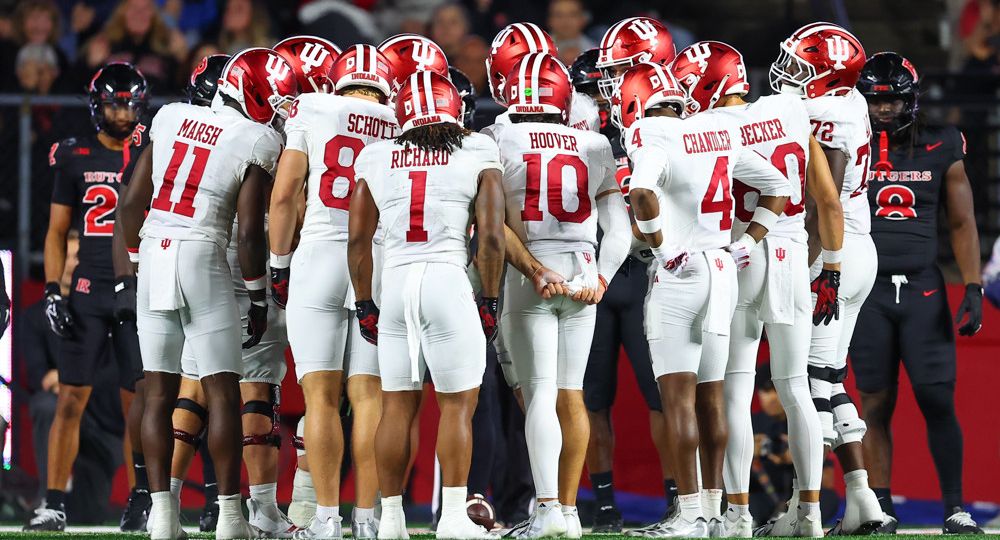
Indiana Turns Afterthought Status Into Perfection
Indiana entered 2025 after an 11-win season and a College Football Playoff appearance in Curt Cignetti’s first year. The Hoosiers therefore began their championship campaign with an established recent achievement, despite a much longer history outside the sport’s leading programs. The surprise was how quickly that initial breakthrough developed into an unbeaten national title season.
Cignetti’s second season took Indiana from playoff participant to national champion. For readers following NCAAF betting lines, the progression offers a reason to examine recent performances alongside a program’s historical reputation. Indiana’s earlier struggles no longer described the team taking the field, although its previous playoff appearance did not guarantee the championship that followed.
The Hoosiers completed the 2025 season 16-0, joining 1894 Yale and 2019 North Dakota State among the Division I teams to finish an unbeaten 16-win championship campaign. North Dakota State achieved its record at the FCS level, while Indiana’s title came through the College Football Playoff.
Indiana’s championship finish included four victories across the conference title game and College Football Playoff:
- Big Ten Championship: Beat Ohio State 13-10.
- CFP quarterfinal: Defeated Alabama 38-3.
- CFP semifinal: Defeated Oregon 56-22.
- National Championship: Beat Miami 27-21 on January 19, 2026.
The sequence took Indiana from conference champion to national champion, completing its 16-0 season against three playoff opponents.
The achievement came in Cignetti’s second season, following an initial campaign that had already changed expectations. That sequence makes Indiana’s story more specific than a sudden rise from obscurity: the program first established playoff credibility, then exceeded that standard. Its turnaround remains an exceptional result rather than a timetable every rebuilding program will reproduce.
Arizona State Rewrites Big 12 Expectations
Arizona State entered its first Big 12 season in 2024 projected to finish last, placing 16th out of 16 teams in the official preseason media poll. Head coach Kenny Dillingham overturned those expectations with an offense led by quarterback Sam Leavitt and running back Cam Skattebo.
The Sun Devils finished the regular season 10-2 before defeating Iowa State 45-19 in the Big 12 Championship Game. Winning the conference in their debut season created a clear contrast between the preseason projection and their results, securing a College Football Playoff berth.
Arizona State then pushed Texas into double overtime before losing 39-31 in the Peach Bowl. The defeat ended its championship pursuit, but the journey from last-place projection to conference champion remained one of the season’s strongest examples of exceeding expectations.
Cincinnati Breaks the Power Five Barrier
The original four-team College Football Playoff created a difficult obstacle for Group of Five contenders. Despite impressive records, programs outside the Power Five conferences struggled to gain serious consideration for national championship opportunities.
Cincinnati challenged that precedent in 2021. Under head coach Luke Fickell, the Bearcats went undefeated in the regular season, including a significant road win over Notre Dame. They then defeated Houston 35-20 in the American Athletic Conference Championship Game, reaching selection day at 13-0.
The selection committee awarded Cincinnati the No. 4 seed, making the Bearcats the first program outside the Power Five selected for the four-team CFP. The achievement marked a breakthrough for teams outside college football’s traditional power conferences.
Alabama defeated Cincinnati 27-6 in the Cotton Bowl semifinal, ending the Bearcats’ championship campaign. Their historical achievement remained the selection itself. For readers using NCAAF insights and trends to examine later contenders, Cincinnati’s season illustrates why earning playoff access and succeeding after qualification are separate accomplishments.
TCU Shocks the Preseason Poll
TCU entered the 2022 season projected to finish seventh in the Big 12 preseason media poll. Sonny Dykes was beginning his first season as head coach. Dykes transformed the team’s competitive identity. Quarterback Max Duggan emerged as a Heisman Trophy finalist, while an explosive offense repeatedly delivered victories. TCU’s ability to recover from situations became a defining characteristic.
The Horned Frogs finished the regular season 12-0 before losing the Big 12 Championship Game to Kansas State. The 31-28 overtime defeat left TCU at 12-1, but the selection committee still awarded the team a playoff place. A conference championship was not required for this route into the four-team field.
TCU defeated Michigan 51-45 in the Fiesta Bowl semifinal before falling to Georgia in the national championship game. Georgia’s 65-7 victory supplied a decisive ending, while TCU’s appearance remained a departure from its seventh-place conference projection.
James Madison and Tulane Redefine Access
The CFP expanded to 12 teams beginning with the 2024 season. For the 2025 field, automatic places went to the five highest-ranked conference champions alongside seven at-large selections. Winning a conference did not guarantee entry: each champion’s ranking relative to other champions mattered.
James Madison captured the Sun Belt championship, while Tulane secured the American Conference title. Both reached the playoff through the conference-champion pathway, with Tulane receiving the No. 11 seed and James Madison the No. 12 seed.
Those seeds differed from their positions in the committee’s rankings. Tulane finished No. 20 and James Madison No. 24, but their status among the five highest-ranked conference champions secured places in the bracket.
James Madison became the first Sun Belt program selected for the CFP, while Tulane also made its playoff debut. Their appearances represent a different kind of surprise from Arizona State’s reversal of a preseason poll: the significance lies in the programs reaching a championship competition through a defined qualification route.
Why College Football’s Biggest Surprises Matter
These campaigns show several ways expectations and postseason outcomes diverge. Arizona State and TCU exceeded recorded conference projections, Cincinnati broke a selection barrier and Indiana turned an earlier playoff appearance into a perfect championship season.
James Madison and Tulane demonstrated the significance of expanded access. Reading those achievements within their respective formats preserves what made each story distinctive, without treating every breakthrough as evidence of the same path to success.