


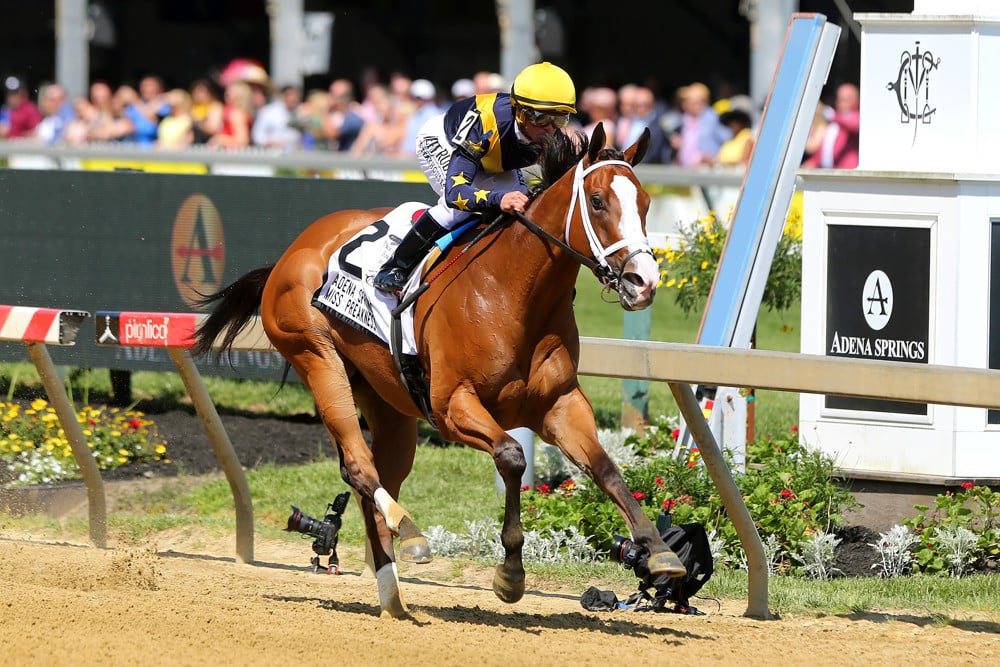
Most people’s first proper bet on a horse comes at a Melbourne Cup sweep, which is to say it isn’t really a bet at all. The step from there to understanding a Saturday metropolitan card is bigger than it looks, and the guides that promise to explain it in five minutes generally leave out the two things that determine whether you have any fun: what the bet types actually mean, and how much the bookmaker is taking.
This covers both.
The codes
Australia runs three racing codes and they’re separate sports with separate form.
- Thoroughbred racing is the big one – horses ridden by jockeys, flat racing over distances from about 1000m to 3200m. This is the Melbourne Cup, the Everest, the Cox Plate, and the Saturday cards at Randwick, Flemington, Eagle Farm and Ascot.
- Harness racing, or the trots, has horses pulling a two-wheeled sulky with a driver aboard, running at a trot or pace rather than a gallop.
- Greyhound racing is dogs over short distances, typically 300m to 700m.
Within thoroughbreds, meetings are classed as metropolitan, provincial or country. It matters more than you’d think: metro meetings have deeper fields, better form lines, more money in the markets and, as you’ll see below, better prices.
The bet types
Win
Your horse finishes first. Nothing else counts. The simplest bet on the board and the one with the lowest built-in margin, which makes it the best value bet available to a beginner.
Place
Your horse finishes in the placings. How many places pay depends on field size – in a field of five to seven runners it’s the top two, in eight or more it’s the top three, and some jurisdictions pay four places in very large fields. Place odds run roughly a quarter to a third of the win price.
Each-way
Half your stake on the win, half on the place, and it’s priced as two bets. A $20 each-way bet costs $40. If the horse wins you collect both. If it runs third you collect the place portion only. Sensible on longer-priced runners, poor value on short-priced favourites where the place dividend barely covers the losing win leg.
Exotics
Where it gets complicated and where the takeout gets steep.
- Quinella: the first two home in either order
- Exacta: the first two in exact order
- Trifecta: the first three in exact order
- First 4: the first four in exact order
- Quaddie: the winner of four nominated races at the same meeting
Exotics can be boxed, meaning you cover every possible ordering of your selections, which multiplies the cost. A boxed trifecta of four runners is 24 combinations, so at $1 a combination it costs $24.
They’re fun, the dividends are large, and the operator’s cut is much higher than on a win bet. Treat them as entertainment rather than strategy.
Fixed odds versus the tote
This is the choice that confuses newcomers most, and both options are on every betting screen in the country.
- Fixed odds means you lock in the price when you bet. Take $6.00 and you get paid at $6.00, whether the horse firms to $3.50 or drifts to $12 by the jump. The bookmaker sets the price and carries the risk of getting it wrong.
- Tote betting, also called parimutuel, works completely differently. Every bet of a given type goes into a pool, the operator takes a percentage out, and whatever’s left is divided among the winning tickets. Your dividend isn’t known until the race has been run, because it depends on how the pool settled.
The practical difference: the tote often pays better on longshots, because the crowd piles into favourites and leaves the outsiders’ share of the pool thinly contested. Fixed odds tend to be better on well-fancied runners, and they give you certainty.
The tote-derived products
Because punters wanted both, bookmakers built hybrids. You’ll see these on every racing app:
- Best Tote, sometimes called Best of the Best or BOB: pays the best dividend of the three major state totes
- Top Tote Plus: the best of the totes or the starting price, whichever is higher
- Mid Tote or Midi Div: the middle of the three tote dividends
- SP: the official starting price
These are structured to benefit the operator more than the marketing suggests, often through caps or by drawing on a specific pool. Treat them as a small structural improvement on plain fixed odds rather than free money.
One rule that holds up: all exotics settle on the tote pool, regardless of what you chose for your win bet.
Reading a form guide
The form guide is a dense block of numbers that looks impenetrable and mostly isn’t. The essentials:
- Recent form appears as a string of finishing positions, most recent last. A run of 3-1-2 is a horse in good order. An x or a dash indicates a spell. Look at when those runs happened as well as what they were – a win four months ago means less than a solid second a fortnight back.
- Barrier is the starting gate. Inside barriers save ground, which matters enormously at sprint distances and around tight tracks, and matters far less over a mile at a track with a long straight like Flemington.
- Weight is what the horse carries, handicapped to even the field. More weight on a better horse.
- Track condition runs from Firm through Good, Soft and Heavy, each with a number. Some horses handle wet ground and some are hopeless on it, and the form guide will show you their record on each surface. Check the rating on the morning of the race, not the day before – it changes.
- Distance and class – has this horse won over this trip, and has it competed at this grade before? A horse stepping up in class from a country maiden to a metropolitan race is facing a different standard.
- Jockey and trainer statistics are published and worth a glance, particularly trainer strike rates at specific tracks.
None of this makes you an expert. It stops you backing a first-up sprinter over 2400m on a heavy track because you liked the name.
The bit most guides leave out: what it costs you
Add up the implied probability of every runner in a race – that’s 1 divided by each price – and on a fixed-odds metropolitan win market at an Australian corporate bookmaker the total will typically land somewhere between 115% and 130%. Anything over 100% is the bookmaker’s margin. On provincial and country meetings it’s wider still.
Tote takeout works differently but lands in similar territory, generally around 14.5% on win pools and considerably higher on the exotics.
That’s the hurdle you’re clearing before you’ve picked a single winner. It’s also the strongest argument for two habits.
The first is to stick largely to win betting, because it carries the thinnest margin of anything on the board.
The second is to shop for the price.
Shopping for the price
The same horse is a different price at different bookmakers, often by a lot. One might have a runner at $6.00 while another has it at $6.50. That’s fifty cents in the dollar on the same animal in the same race – an 8% difference in return for zero additional risk.
Over one bet it’s trivial. Over a season it’s the difference between a small loss and roughly breaking even, and it’s entirely free.
Doing it manually means holding several accounts and flicking between apps before every bet, which is tedious enough that most people stop. Sports betting tools built for the Australian market pull live prices from the major bookmakers into a single screen so you can see the best available number without the tab-juggling. Some are free and affiliate-funded, some are paid subscriptions. Either way, comparing prices is the highest-return habit available to a recreational punter, and it requires no skill at all.
Minimum bet limits: know these
Australian bookmakers have a reputation for restricting customers who win. There’s a real protection against it on racing, and a surprising number of punters have never heard of it.
In New South Wales, Victoria, Queensland and South Australia, licensed operators must accept a fixed-odds bet at their publicly displayed price to a set liability: $2,000 on a win, win-place or each-way bet on metropolitan thoroughbred racing, and $1,000 on country and provincial meetings, with $800 and $400 respectively on place bets. The limits generally apply from a set time on race day – typically 9am for day meetings.
Critically, the rules state that operators must not restrict or close an account simply to avoid complying. Tasmania and the ACT run their own versions. The Northern Territory and Western Australia don’t have minimum bet limits at all.
Multi bets, bonus bets, boosted odds and exotics generally fall outside these protections, and they don’t apply to retail betting in pubs and clubs.
You are unlikely to need this in your first year. It’s worth knowing it exists.
Staking, and the part that matters most
Decide what your betting bankroll is before you place a bet. Not your savings, not your pay – a separate amount you’ve decided you can lose entirely without it affecting anything.
Then bet in units. One unit should be 1-2% of that bankroll. If your bank is $500, a unit is $5 to $10. Bet the same unit every time, or close to it. Flat staking is unglamorous and it’s the single thing that keeps recreational punters in the game long enough to enjoy it.
The mechanism that does the damage is chasing – increasing stakes after a loss to get it back. It feels like a correction and it’s the fastest route to losing far more than you intended. If you catch yourself doing it, stop for the day.
Set a deposit limit on every account the day you open it. Every licensed Australian operator has to offer them and it takes about thirty seconds.
A few other practicalities: credit cards can’t be used to deposit with any licensed Australian operator, online in-play betting isn’t available here and live bets must be placed by phone, and if you ever want to shut the whole thing down, BetStop is the national self-exclusion register at betstop.gov.au – registering closes your accounts across every licensed operator at once.
Where to start
Pick one Saturday metropolitan meeting. Read the form for a single race properly rather than skimming eight. Have a small win bet at the best price you can find across two or three books, and write down why you picked the horse.
Do that for a month and you’ll have learned more than any guide can teach you, including the lesson that this is difficult. Most punters lose over time. The ones who enjoy it are the ones who decided in advance what it was going to cost them.