

Electronic horse racing brings the thrill of the racetrack right into the casino floor with miniature mechanical or electronic horses racing on a physical track. Games like Konami’s Fortune Cup and its predecessor, the classic Sigma Derby, deliver fast-paced action, social excitement, and multiple betting options in a compact, engaging format.
These games stand out from traditional slots or table games because players gather around a shared central track, cheering as the little horses gallop to the finish. Whether you are at a Las Vegas Strip property, a downtown casino, or similar venues, electronic horse racing offers a nostalgic yet modern twist on casino entertainment.

What Is Electronic Horse Racing in Casinos?
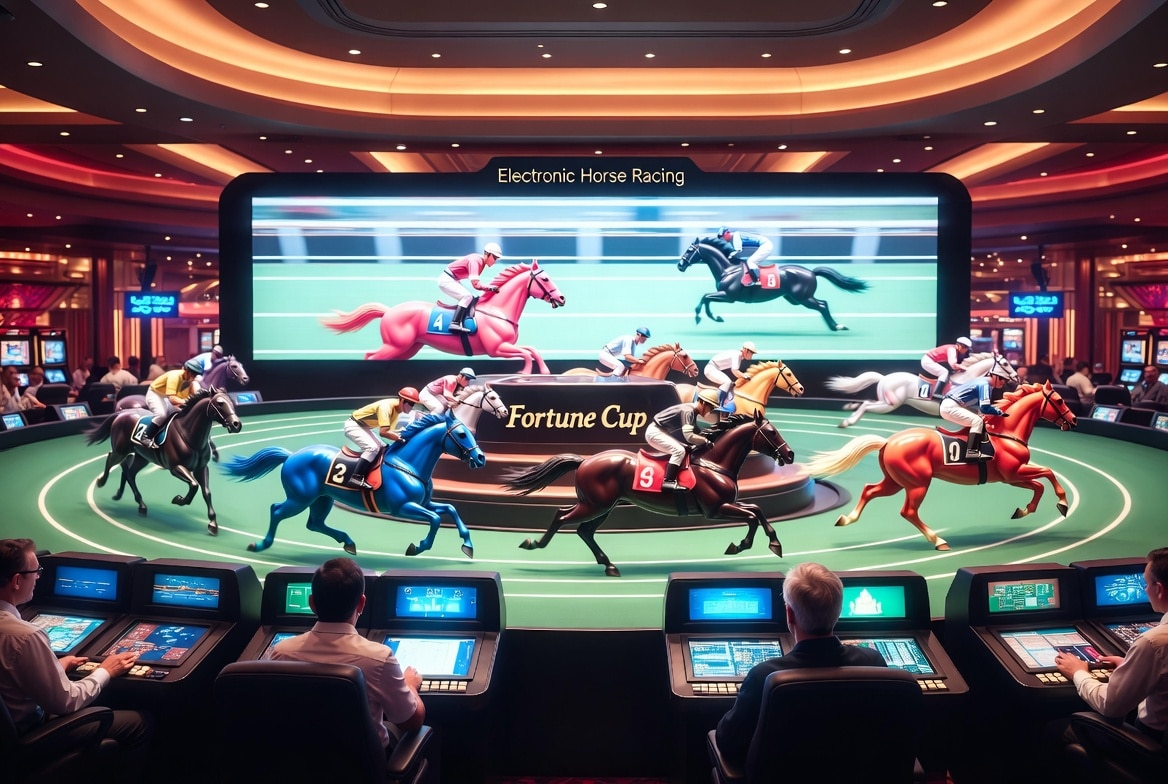
Electronic horse racing refers to casino games featuring small mechanical or electronic horses that race around a miniature track while players place bets via touchscreen terminals. The most prominent modern example is Fortune Cup by Konami Gaming. It’s a direct evolution of the beloved 1980s Sigma Derby machines.
Other names and variants include Sigma Derby, the vintage electro-mechanical version still running at select spots like The D in Las Vegas, and similar mechanical racing games from manufacturers like Alfastreet.
Virtual or animated versions also appear in some casinos and online platforms as RNG-driven simulations. These games combine arcade-style mechanics with casino betting and are highly social, with multiple players sitting at stations around the track while watching the race unfold live or via big-screen animation. Races happen frequently, often every one to two minutes, keeping the energy high.
How Electronic Horse Racing Works: Fortune Cup Breakdown
Fortune Cup and similar machines typically feature a central nine-foot-wide mechanical track with six to eight horses that move freely and independently. They are accompanied with eight to twelve or more touchscreen betting stations and a large overhead LCD screen. The screen shows real-time digital animation, stats, and commentary that feels like a sports broadcast.
Some versions also include progressive jackpot features. Odds and statistics first appear on the screens. Players then have a short betting window, usually thirty to sixty seconds, to place wagers using chips starting from ten cents and higher. Once betting closes, the race begins, and the horses race for a short duration, often under a minute.
Winners are paid immediately based on the finishing order. The outcomes are determined randomly or via a certified system that targets a specific return, so there is no player skill involved in predicting winners. Each race stands independent of the others.
Progressive jackpots add extra appeal. After betting closes, the machine randomly selects one horse, and if that horse wins the race, eligible players can win one of several jackpot tiers. These contribute a small amount to the overall return but remain subject to the house edge.
The return to player for Fortune Cup typically ranges from about eighty-two to eighty-four percent depending on the casino. This means the house edge sits between sixteen and eighteen percent. That is higher than many table games or well-paying slots, so these games work best when enjoyed as entertainment rather than a profit vehicle.
Betting Options
Most machines like Fortune Cup offer three core bet types that follow along with standard horse racing. A Win bet requires your chosen horse to finish first and carries the highest risk along with the highest potential payout. A Place bet wins if your horse finishes first or second and offers lower risk as a solid middle-ground option. A Quinella bet asks you to pick two horses to finish first and second in any order, which covers more outcomes and often provides good value for the excitement level.
Some machines display all possible Quinella combinations, making it easy to select your picks. Odds appear clearly before each race, and payouts are fixed based on those odds rather than a parimutuel pool in most electronic versions.
Several Betting Strategies for Electronic Horse Racing
Bet small and consistently by aiming for one to five percent of your remaining bankroll per race. This approach prevents quick blowups and lets you enjoy more races overall. Flat betting with the same stake every time proves far safer than chasing losses.
Focusing on bet types with potentially better value also makes sense. Sample data from Fortune Cup shows slight variations in effective return to player across bet types, with Place bets sometimes delivering marginally better long-term returns than straight Win bets in certain setups.
Quinella bets spread risk across two horses and can feel more engaging while still fitting within the overall house edge. Always check the displayed odds versus the implied probability, and consider a horse if the odds seem generous relative to the field, while remembering that the overall house edge still applies across the board.
Hedging your bets through techniques like Dutching provides another practical layer. Instead of putting everything on one horse, divide your stake across multiple selections in the same race, such as betting on two or three horses to win or place. This reduces variance and can lock in smaller, more frequent wins or minimize losses on any given race.
It works especially well when combining Win and Place bets on the same horse or using Quinella wagers. Calculate your total stake carefully so the potential payout covers your outlay plus a small profit on the covered outcomes.
Other Strategies
Jackpot and side bet awareness helps keep expectations realistic. The progressive jackpots add excitement and a small positive contribution to the return to player when they hit, yet they still form part of the overall negative-expectation game. Only chase jackpots with money you are comfortable risking purely for the thrill, and treat them as a bonus rather than a core strategy.
Avoiding progressive betting systems such as Martingale proves wise in this setting. Systems that double bets after losses sound appealing but turn dangerous here because of the high house edge and your own bankroll limits. You can hit a wall quickly during a cold streak, so sticking to flat or conservative betting remains the safer choice.
Finally, treat electronic horse racing primarily as entertainment. Because of the house edge, view it as paid entertainment similar to attending a show or playing a fun arcade game. The social atmosphere, cheering with other players, and visual spectacle represent the real draws, and many regulars play for hours on modest stakes simply because the experience stays engaging and different from standard slots.
Tips for Maximizing Enjoyment and Minimizing Risk
Set time and money limits in advance and stick to them. Never chase losses and walk away immediately when you reach your limit. Take breaks between races to stay clear-headed. If the experience stops being fun, stop playing altogether.
Electronic horse racing shines as a social and visually exciting casino option, but like all gambling, the odds favor the house. Play smart, stay within your means, and enjoy the thrill of those little horses thundering down the stretch. Whether you are trying Fortune Cup for the first time or revisiting a classic Sigma Derby setup, these strategies will help you get the most out of the experience while keeping risk under control. Good luck at the races.